

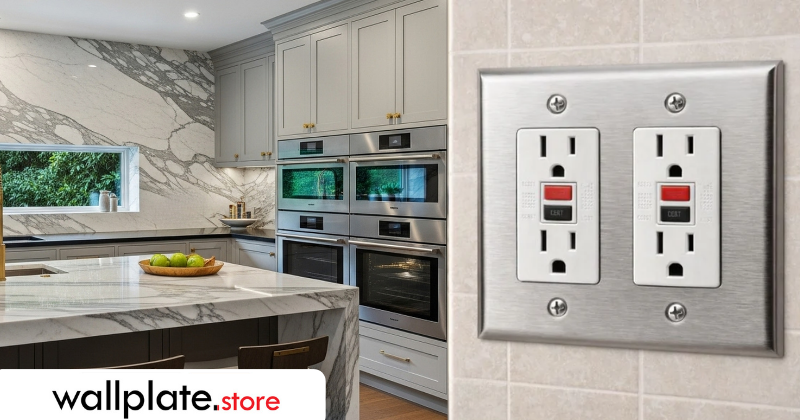
Kitchens are hard on wall plates — especially the outlets and switches along the backsplash and countertop line. Between steam, cooking residue, constant wipe-downs, and high daily use, this “high-splash zone” is where cheap plastic covers crack, discolor, or start looking grimy fast. Stainless steel wall plates are a simple upgrade that stays clean-looking, holds up to frequent cleaning, and pairs perfectly with stainless appliances.
This post is intentionally focused on one specific kitchen problem: backsplash-area outlets and switches (including GFCI outlets, rocker switches, dimmers, and mixed device combos) — and how to choose the right stainless steel wall plate so the installation looks clean and finished.
Why Stainless Steel Works So Well on Kitchen Backsplashes
- Handles frequent cleaning: A smooth metal surface wipes down easily and doesn’t “age” like plastic.
- Resists moisture and humidity: Great near sinks, coffee stations, dishwashers, and anywhere steam is common.
- Looks intentional: Stainless wall plates visually match stainless appliances and many modern fixtures.
- Ideal for high-touch areas: Outlet covers near counters get constant contact — stainless holds up.
The 4 Most Common Kitchen Backsplash Wall Plate Types (and What They Fit)
1) Stainless Steel Decorator / Rocker Plates (GFCI, *Decora®, Smart Switches)
If your kitchen has rectangular “Decora-style” devices — like GFCI outlets, paddle/rocker switches, smart switches, or slide dimmers — you’ll want a decorator/rocker stainless steel wall plate.
Shop: Stainless Steel Decorator / Rocker Wall Plates
2) Stainless Steel Duplex Outlet Covers (Standard Outlets)
For standard household outlets (the classic two-plug receptacle), choose a stainless steel duplex wall plate. This is the most common backsplash outlet type in many kitchens.
Shop: Stainless Steel Wall Plates
3) Stainless Steel Toggle Switch Plates (Traditional Switches)
If you have older-style toggle switches (the small lever that flips up and down), use a stainless steel toggle wall plate. These still show up often in older kitchens, basements, and utility areas.
Shop: Stainless Steel Toggle Light Switch Plates
4) Stainless Steel Combination Wall Plates (Mixed Devices in One Box)
Combination plates solve a super common kitchen layout: one electrical box with two different device types (example: a toggle switch + duplex outlet, or a rocker switch + GFCI). Using the correct combination plate keeps everything aligned and avoids “almost fits” situations.
Shop: Stainless Steel Combination Wall Plates
The Secret to a Clean Backsplash Install: When to Go Oversized (Jumbo)
Backsplashes and tile installs are where small imperfections show the most. If the tile cutout is slightly wide, the drywall opening is uneven, or you’re covering old paint lines from a previous plate, oversized (jumbo) stainless steel wall plates can be the difference between “DIY obvious” and “contractor clean.”
- Best for remodels: Covers messy openings without patching.
- Best for tile: Hides larger cut lines and looks intentional.
- Best for quick upgrades: Instant visual cleanup around outlets and switches.
Shop: Oversized Stainless Steel Wall Plates
Kitchen Backsplash Checklist: Choose the Right Stainless Plate in 60 Seconds
- Identify the device opening: duplex outlet, decorator/rocker (GFCI/smart switch), toggle, or a combo.
- Count the gangs: 1-gang, 2-gang, 3-gang, etc. (one box can hold multiple devices side-by-side).
- Decide standard vs oversized: if there’s tile, uneven cuts, or old paint lines, oversized is usually safer.
- Match the “look”: stainless is perfect when you have stainless appliances or a modern/industrial kitchen style.
Cleaning Tip: Keep Stainless Looking New (Without Scratching)
- Use a soft microfiber cloth with mild soap and water for routine wipe-downs.
- Avoid abrasive pads or harsh powders that can dull the finish over time.
- If you’re dealing with grease film, a gentle degreasing cleaner on a soft cloth usually does the trick.
Quick Picks: Most Popular Stainless Choices for Kitchens
- GFCI / rocker backsplash outlets: Stainless Steel Decorator / Rocker Plates
- Mixed device boxes: Stainless Steel Combination Wall Plates
- Remodel / tile coverage: Oversized Stainless Steel Wall Plates
- Browse everything stainless: Stainless Steel Wall Plates
FAQ: Stainless Steel Wall Plates in Kitchens
Are stainless steel wall plates good near a kitchen sink?
Yes — kitchens are humid and frequently cleaned, and stainless steel holds up well in these conditions. Many people choose stainless specifically for sink-side backsplash outlets.
Do I need a special plate for a GFCI outlet?
Usually, yes. Most GFCI outlets use a decorator/rocker style opening (rectangular). Make sure you choose the correct opening type before ordering.
Should I use standard or oversized plates on tile backsplashes?
If the tile cutout is even slightly larger than the device, oversized (jumbo) plates are often the easiest way to get a clean, finished look without rework.
What if I have a switch and outlet in the same box?
That’s exactly what combination wall plates are for. They’re designed to fit mixed device layouts cleanly and correctly.
Final Thought: Small Upgrade, Big Visual Payoff
In a kitchen, wall plates are constantly in view and constantly in use. Upgrading the backsplash area to stainless steel wall plates is one of those “small details” that makes the whole space feel cleaner, more modern, and more professionally finished — especially when paired with GFCI outlets, smart switches, and a stainless appliance package.
Ready to upgrade your kitchen backsplash outlets and switches? Browse our stainless collections here: Stainless Steel Wall Plates.
*“Decora®” is a registered trademark of Leviton Manufacturing Co., Inc. This product is not manufactured by, affiliated with, or endorsed by Leviton. Mulberry Metal Products.