

In commercial buildings, hotels, schools, office spaces — and increasingly in residential homes — bathroom lighting and exhaust fan systems are being upgraded to occupancy sensors. This simple retrofit improves safety, saves energy, and reduces maintenance.
But when two separate switches (one for the light and one for the exhaust fan) are replaced with a single sensor device, a common question arises:
How do you properly cover the existing 2-gang electrical box?
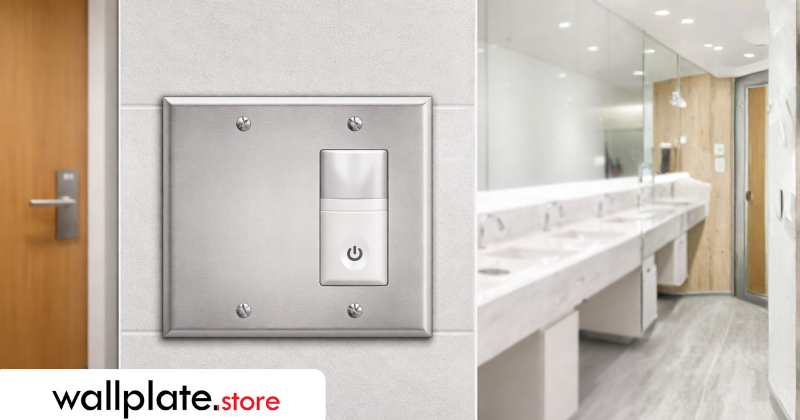
The answer is a two-gang wall plate with one device opening (*Decora®/rocker/GFCI style) and one blank opening — available in durable painted metal or stainless steel.
The Problem: Two Switches, One New Sensor
Traditionally, many public restrooms and private bathrooms were wired with:
- One toggle switch controlling the lights
- One toggle switch controlling the exhaust fan
Over time, facility managers discovered a major issue: exhaust fans were frequently left running for hours — or even days. Continuous fan operation increases wear, wastes energy, and in some documented cases, overheated motors have created fire hazards.
As a result, hotels, schools, office buildings, and property managers began converting these bathrooms to occupancy sensor controls.
The Modern Solution: One Sensor Controls Everything
Today’s bathroom retrofit typically involves installing a single wall-mounted occupancy sensor that:
- Automatically turns on lights when someone enters
- Activates the exhaust fan simultaneously
- Keeps both running for 10–20 minutes after the room is vacated
- Automatically shuts everything off
This improves:
- Energy efficiency
- Fire prevention
- Code compliance
- Guest convenience (especially in hotels)
- Maintenance control
However, once both old switches are removed, you're left with a 2-gang electrical box — but only one device is needed.
Why a 2-Gang Plate with One Blank + One Device Opening Is Necessary
Because the electrical box remains a 2-gang box inside the wall, it cannot simply be reduced to a single-gang cover. The correct solution is a:
2 (or more) Gang Wall Plate — One Decora/Rocker Opening + One Blank Opening

This configuration allows:
- The occupancy sensor to mount securely in one gang
- The unused gang to be safely covered
- The installation to remain code-compliant
- A clean, professional finished appearance
Why Painted Metal and Stainless Steel Are Preferred in Commercial Bathrooms
1. Durability
Plastic plates can crack, discolor, or warp — especially in humid bathroom environments. Metal wall plates are impact resistant and long-lasting.
2. Fire Safety
Metal wall plates are non-combustible and provide an additional layer of safety in commercial applications.
3. Moisture Resistance
Stainless steel plates are particularly ideal for restrooms due to their resistance to moisture and corrosion.
4. Professional Appearance
In hotels, schools, and office buildings, aesthetics matter. Painted metal (white, red, black) offers a clean look, while stainless steel provides a modern, commercial finish.
5. Oversized (Jumbo) Options
During retrofits, removing old switches often reveals paint lines or drywall imperfections. Oversized (jumbo) wall plates are extremely popular because they:
- Cover previous paint marks
- Hide drywall damage
- Eliminate the need for repainting
- Provide a finished, upgraded look
Common Applications
This 2-gang configuration is widely used in:
- Hotel guest bathrooms
- Commercial restroom stalls
- Office building bathrooms
- School facilities
- Apartment renovations
- Residential master bathrooms
It is one of the most common retrofit combinations we see ordered in both standard and oversized sizes.

Standard Size vs. Oversized (Jumbo)
Standard Size
- Best for new construction
- Clean drywall conditions
- Fresh installations
Oversized (Jumbo)
- Ideal for remodels
- Covers paint lines from old plates
- Hides minor wall damage
- Common in hotel renovations
Many facility managers choose oversized plates specifically to avoid repainting entire restroom walls during retrofits.
Stainless Steel vs. Painted Metal: Which Should You Choose?
Painted Metal
- Available in white, red, black, and other finishes
- Clean appearance
- Cost-effective
- Popular for schools and offices
Stainless Steel
- Excellent for high-moisture areas
- Commercial-grade look
- Extremely durable
- Easy to maintain and sanitize
Why This Retrofit Is Growing in Popularity
Energy costs are rising. Fire safety standards are tightening. Guests expect convenience. Maintenance departments want fewer service calls.
By installing a single occupancy sensor to control both lighting and exhaust — and finishing the installation with a proper 2-gang metal wall plate — building owners achieve:
- Lower operating costs
- Improved safety
- Cleaner design
- Long-term durability
Frequently Asked Questions
Can I use a 1-gang plate instead?
No. If the electrical box inside the wall is a 2-gang box, it must be covered with a 2-gang wall plate.
Will a blank section look odd?
No. When properly installed, the blank section appears clean and intentional — especially with matching metal finishes.
Are metal wall plates code compliant?
Yes. Metal wall plates are commonly used in commercial and residential applications and are non-combustible.
Do I need oversized?
If you're retrofitting and removing old switches, oversized plates are often recommended to cover paint lines and wall imperfections.
Final Thoughts
As occupancy sensor retrofits become standard practice in commercial and residential bathrooms, the demand for 2-gang wall plates with one device opening and one blank continues to grow.
Choosing painted metal or stainless steel ensures durability, safety, and a professional finish that will last for years.
Whether you're upgrading a hotel restroom, school facility, office building, or your own home, the right wall plate completes the installation properly — both functionally and aesthetically.
*“Decora®” is a registered trademark of Leviton Manufacturing Co., Inc. This product is not manufactured by, affiliated with, or endorsed by Leviton.